
Supporting Older Adults in Rural Communities
Rural communities are aging with fewer workers, fewer services and long distances between people and support. AscendRural is working with rural organizations and technology companies to identify solutions that fit rural realities and build thoughtful pathways from community need to real-world implementation.

The need
Rural communities are aging with less infrastructure around them.
Rural America has a larger share of older residents than urban America, while many communities are navigating closures, workforce shortages, distance and limited access to home- and community-based support. These pressures make the question bigger than “What technology exists?” The more useful question is: “What can actually work here?”
- 21%of rural residents are over age 65, compared with 17% in urban areas. In two-thirds of rural counties, at least one in five residents is over 65.Source: USDA Economic Research Service, 2023
- 774nursing homes have closed since 2020. Of 40 counties that became nursing-home deserts in that period, 85% are rural.Source: AHCA, 2024
- 35%fewer home health aides per older adult in rural areas than urban areas: 33 per 1,000 adults over 65, versus 50.Source: University of Minnesota Rural Health Research Center, 2023
We do not have the workforce currently, nor will we have the workforce in the future to care for these older adults. So we’re really tasked with doing something radically different.
What we heard
Community insight became three clear problems to solve.
Before sourcing technology, AscendRural spoke with more than 20 organizations, including rural providers, community organizations and national experts. Those conversations helped distinguish a broad landscape of needs from three priority problems that technology might meaningfully address.
01Strengthening Care Systems & CapacityHelp rural organizations extend limited workforce capacity and spend more time on meaningful support.
Rural providers described persistent workforce shortages, reimbursement constraints and administrative workload that leave small organizations doing more with fewer people. Staff time is often absorbed by documentation, scheduling, coordination, compliance and other operational tasks. The opportunity is for technology to reduce unnecessary workload, strengthen coordination and help scarce human capacity go further without diminishing the quality of support older adults receive.
Opportunity areas
- Data-informed and automated planning and delivery
- Increasing availability of workers
- Task automation and robotics
- Funding and return on investment
What we heard
“Most of the time they’re spending is in front of a computer … a lot of it has to do with paperwork and things we have to do documentation-wise. And that consumes the time that could be better spent with a nurse face-to-face with a resident.”
02Enabling Social Connection & EngagementCreate more ways for older adults to stay connected, engaged and part of their communities.
Discovery highlighted the challenge of reaching older adults who may live far from community centers, lack transportation or reliable connectivity, or have limited confidence using digital tools. Community organizations described social connection as an essential part of supporting both physical and emotional well-being. Technology may help when it is accessible, intuitive and rooted in trusted community relationships.
Opportunity areas
- Communication and engagement
- Supporting a sense of purpose
- End-of-life planning
What we heard
“The social connection and development of service is really where we’re seeing some of the biggest gaps right now.”
03Daily Living, Safety & Home SupportHelp older adults remain safe and independent with fewer hands nearby to support them.
Community partners described long waitlists, rising care minimums and limited tools for supporting safety and daily activities. The opportunity is to explore technology that supports prevention, early detection and practical daily needs while fitting the realities of rural homes, service systems and connectivity.
Opportunity areas
- Remote monitoring and early detection
- Physical home accessibility and hazard mitigation
- Home health and daily living
What we heard
“If we can gather that data early, before it actually presents itself, we can deal with the underlying health condition faster and we’re avoiding hospitalizations or falls.”
Other needs surfaced through discovery
Part of the broader opportunity landscape, alongside the three priority problems that guided sourcing.
- Accessibility of supportDigital access, platform accessibility and transportation.
- Family caregiver empowermentCaregiver well-being, care coordination, technology navigation and skills.
- Supporting people living with dementia and their familiesNavigating changes and creating opportunities for connection.
What a solution has to do
Rural fit is more than whether the technology works.
AscendRural translated what rural providers and aging organizations said into eight criteria for rural fit. These criteria were used to consider whether a solution could work within the staffing, systems, connectivity, funding and trust conditions of rural communities.
01Intuitive Design & AccessibilityEasy to understand and use across different levels of digital comfort.
What it means
The solution should be intuitive for older adults and other users with limited digital literacy or concerns about technology, scams or exploitation.
Why it matters in rural communities
A technically capable product can still fail to reach people if the experience assumes smartphones, high digital confidence or extensive training.
What we heard
“Looking at under 50 residents in a nursing home, I probably have three or four with a smartphone. Some may never even have had a cell phone.”
— Rural provider 02Low Operational Lift for ProvidersFits into the work rather than creating more of it.
What it means
The technology should require minimal behavior change for staff and should reduce, rather than add to, implementation burden.
Why it matters in rural communities
Small rural teams carry many roles. A solution that demands intensive administration, duplicate work or constant monitoring may not remain in use.
What we heard
“I can’t count how many things I’ve seen implemented … and 30 days down the road no one is using it anymore.”
— Rural provider 03System Integration & InteroperabilityWorks alongside existing systems and processes.
What it means
The solution should integrate with existing workflows, infrastructure and platforms where possible, avoiding unnecessary log-ins, dashboards and duplicate data entry.
Why it matters in rural communities
Rural organizations often have limited IT capacity and little room to maintain disconnected systems.
What we heard
“Please help us. There has to be a way to solve for this.”
— Aging support organization 04Rural Digital FeasibilityWorks within real connectivity constraints.
What it means
The solution must function effectively despite inadequate broadband, unreliable cellular service and other rural infrastructure limitations.
Why it matters in rural communities
Technology cannot support safety or access if it stops working beyond a network boundary or requires connectivity that many homes do not have.
What we heard
“There are even challenges with some fall-detection technology in rural communities, or GPS and location tracking, where different cellular networks operate.”
— Rural provider
05Enhancing the Human FactorSupports human interaction rather than replacing it.
What it means
Technology should create more room for direct support, meaningful conversation and person-centered relationships.
Why it matters in rural communities
The aim is to extend human capacity and improve interaction, not remove the trusted people and relationships on which rural support depends.
What we heard
“If it gives 10 more hours of staff time for quality conversation … those personal interactions are kind of priceless.”
— Rural provider 06Quantifiable Return on InvestmentCreates a credible case for value and sustainability.
What it means
The solution should demonstrate value beyond an initial demonstration through measurable operational, financial or service outcomes.
Why it matters in rural communities
Organizations need evidence that helps leadership, boards and funders decide whether a solution is worth sustaining.
What we heard
“Saving money is great. But are we getting better support for residents? That is my focus.”
— Rural provider 07Alignment with Funding & RegulationWorks within funding mechanisms and regulated environments.
What it means
Solutions should align with viable long-term funding pathways and be ready for the regulatory requirements of the settings in which they will operate.
Why it matters in rural communities
A strong product still needs a realistic way to be paid for and implemented after initial support ends.
What we heard
“The biggest barrier is that there is not a lot of opportunity for payment for the types of technology that could be used.”
— Rural provider 08Scalability to Diverse Rural SettingsCan adapt across different rural communities and organizations.
What it means
The technology should be adaptable across organizations of different types, sizes, workflows and geographies.
Why it matters in rural communities
Rural communities are not interchangeable. Scale depends on adapting to local conditions while preserving the solution’s value.
What we heard
“The key is scalability … solutions that can make a difference in other rural regions as well, not just our own.”
— Aging support organization
Our approach
From community priorities to promising matches.
AscendRural’s Rural Innovation Model brings communities, innovators and partners together to identify priorities, find solutions, build readiness, test what works and support lasting adoption. Each initiative uses the capabilities that fit the needs and readiness of the organizations involved. For this work, the journey to date has focused on Identify & Define, Source, Prepare and Match & Align, and is now moving toward Demonstrate.
- Identify & Define
- Source
- Prepare
- Match & Align
- Moving toward Demonstrate
01Identify & DefineStart with community priorities.
AscendRural listened to organizations serving older adults, providers and national experts to understand the challenges facing rural communities. Those conversations helped define the three priority problem areas and eight criteria for rural fit. The community cohort continued sharpening those priorities as the work moved forward.
02SourceFind technologies with the potential to meet rural needs.
AscendRural translated community-defined problems and rural-fit criteria into a focused technology search. The community cohort brought rural expertise into review of promising technologies, helping assess whether solutions addressed a meaningful need and could realistically fit rural operating conditions.
03PrepareEquip communities and innovators to move forward with confidence.
Selected technology companies participated in rural-readiness programming to deepen their understanding of rural contexts. At the same time, community organizations clarified their priorities, workflows, capacity, decision criteria and implementation realities so both sides could enter matching conversations better prepared to assess fit.
04Match & AlignBring the right communities and solutions together.
At the April 16 Rural Innovation for Older Adults event, community organizations shared their needs and operating realities, technology partners demonstrated their approaches, and both sides took part in structured matching conversations. Community organizations identified the solutions they were most interested in exploring further, and promising relationships are now moving toward scoping and planning.
05DemonstrateMoving towardPrepare promising matches for real-world testing.
AscendRural is supporting interested organizations as they clarify the problem, intended users, workflow, implementation requirements, measures of success, cost and sustainability considerations before deciding whether and how to move into real-world demonstration.
The community cohort
Rural expertise throughout the process.
The community cohort brought together organizations serving older adults. Rather than participating at a single point, cohort organizations brought community expertise across the Rural Innovation Model, helping shape priorities, review promising technologies, prepare for matching conversations and decide which relationships were worth exploring further.
What the cohort contributed
- Identify & DefineHelped sharpen community priorities and define what mattered.
- SourceApplied rural realities and the solution criteria when reviewing promising technologies.
- PrepareClarified organizational needs, implementation conditions and decision criteria before meeting technology companies.
- Match & AlignShared organizational context directly with technology companies and explored possible fit.
- Match & AlignConsidered possibilities without any obligation to pilot or adopt.
- Moving toward DemonstrateIdentified relationships worth taking into deeper scoping and planning.
Some of our community cohort organizations
7 Minnesota-based organizations serving older adults Faith in Action for Cass County
 The Center
 Lakes Area Interfaith Caregivers
 Annandale Care Center
 Vivie
 Bethesda Living
 St. John’s Community Care
The Connection Event · April 16, 2026
From prepared perspectives to real matching conversations.
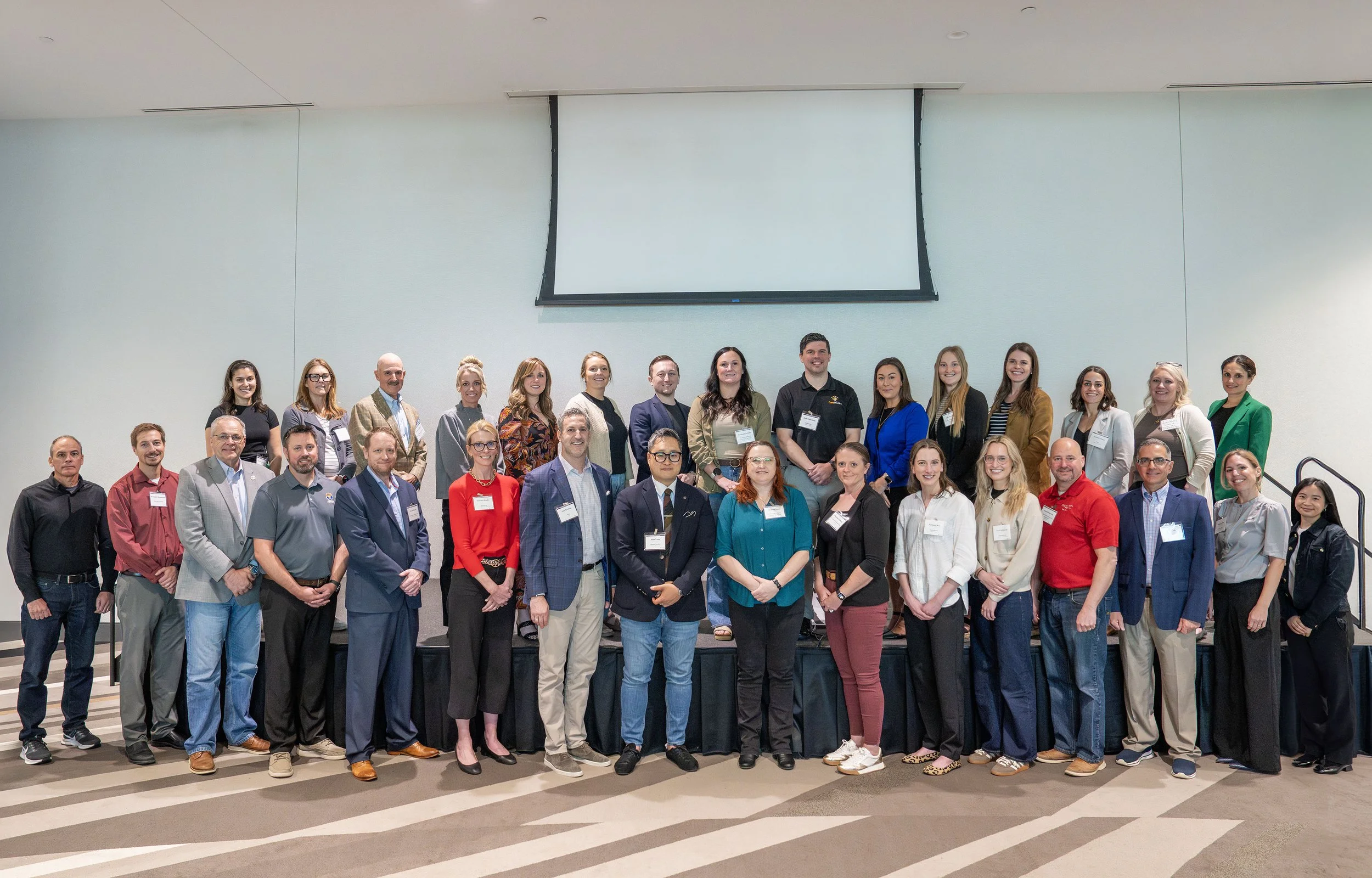
On April 16, 2026, the community cohort and selected technology companies came together for Rural Innovation for Older Adults, an in-person day designed around honest conversation, learning and actionable next steps. Finding a technology partner was not the only valid outcome. Greater clarity, peer connection and a confident “not yet” were also treated as meaningful progress.
- 11
- community organizations
- 8
- technology groups
- 7
- states represented on the community side
The cohort organizations were the prepared core of the community side of the event, while additional organizations expanded the range of perspectives in the room.
How the day worked
- 01Community organization expoCohort organizations shared their work, priorities and real operating context.
- 02Technology partner expoCompanies led with the problem their solution addressed and demonstrated how it worked.
- 03Structured matching conversationsBoth sides discussed fit, lift, limitations and potential next steps.
- 04Reflection and next-step planningOrganizations identified whether they were ready to explore a partnership, interested but not ready, or better served by another path.
The technology partners
Solutions prepared to listen, adapt and explore fit.
Selected technology companies participated in AscendRural’s rural-readiness programming before meeting community organizations. At the event, companies were expected to listen first, explain the problem they addressed, respond honestly about fit and limitations, and explore where continued partnership might make sense.
 care.coachRural-Readiness Accelerator participant
care.coach combines compassionate human support with a tablet-based conversational avatar to engage and support older adults across home and care settings. The solution offers daily check-ins, reminders, social interaction, and proactive alerts.
care.coach ↗ Plated FoodserviceRural-Readiness Accelerator participant
Plated Foodservice provides a modular, “kitchenless” ready-meal solution that simplifies foodservice operations. Their patent-pending heating and holding system delivers high-quality, chef-crafted meals that are heated and served with minimal staff effort, backed by digital tools for menu planning, inventory, compliance, and nutrition management, without needing a central kitchen.
platedfoodservice.com ↗ ZempleeRural-Readiness Accelerator participant
Zemplee builds AI-enhanced remote monitoring solutions that track vital signs in real time and alert care teams about important changes. Their remote health system enables proactive intervention and continuous health oversight for older adults outside of traditional care settings.
zemplee.com ↗ Total LifeRural-Readiness Accelerator participant
Total Life offers online mental health and wellness services designed specifically for older adults. Their virtual therapy platform connects older adults and caregivers with licensed, Medicare-accepting therapists to address anxiety, depression, life transitions, grief, and other concerns.
totallife.com ↗ Xandar KardianRural-Readiness Accelerator participant
Xandar Kardian applies ultra-wideband (UWB) radar technology to monitor health metrics, including vital signs and presence and motion, without wearables. Their contact-free systems support continuous vital sign monitoring for long-term care, home health, and built environments.
xkcorp.com ↗ VivoRural-Readiness Accelerator participant
Vivo is a live, small-group strength and functional fitness program built for adults 55+. Using expert instructors and tailored workouts, Vivo helps participants build strength, improve mobility, and maintain balance through interactive virtual classes and personalized coaching.
teamvivo.com ↗ PontosenseRural-Readiness Accelerator participant
Pontosense uses privacy-first sensors and AI to detect movement, activity patterns, and risk signals in the home without cameras or wearables. Their invisible monitoring system helps families and care teams identify changes in daily behavior and respond quickly to potential issues.
pontosense.com ↗ CarePredictRural-Readiness Accelerator participant
CarePredict offers an AI-driven platform for older-adult care that uses wearable and ambient sensors to learn daily patterns, detect subtle behavior changes, and deliver predictive health insights. Their system helps older-adult living providers and caregivers enable earlier intervention through real-time alerts and actionable operational data.
carepredict.com ↗
Inclusion is not an endorsement. Participation describes what a company has been through with AscendRural, not a guarantee of fit or results.
Where we are now
Preparing promising matches for demonstration.
The Connection Event surfaced community-technology relationships worth exploring further. AscendRural is now supporting interested organizations as they clarify the problem, intended users, workflow, implementation requirements, measures of success, cost and sustainability considerations before deciding whether and how to move into real-world demonstration.
What matched organizations are clarifying
- The problem
- Intended users
- Workflow
- Implementation requirements
- Measures of success
- Cost and sustainability
Then each organization decides whether and how to move into a real-world demonstration.
What the work is reinforcing
Early insights from the work.
These are early observations from discovery, rural-readiness work and matching. They are not pilot findings.
Start with the system, not the technology.
Understand the problem as it is lived, how it is paid for, who decides, what already fills the gap and what success means to each stakeholder before proposing a solution.
Rural readiness is about fit.
Connectivity, staffing, workflow, digital comfort, funding and trust can determine whether a promising technology is practical in a rural setting. The technology has to fit the conditions around it.
Trust is infrastructure.
Rural adoption is relationship-driven. Trusted local organizations and intermediaries are essential to introducing solutions, engaging end users and building confidence.
Plan for adoption before a pilot begins.
A demonstration should be designed around what happens after it: who owns the work, what outcomes justify continuation, who pays and what evidence is needed for a sustainable decision.
“Trusted community voices. Trusted community institutions for the deployment of the solution is literally the only way to make it work. You kind of gotta go community by community.”
Working on a challenge affecting older adults in rural communities?
AscendRural works with rural organizations, innovators and partners to define needs, identify solutions and build implementation pathways grounded in rural realities.