
Strengthening rural volunteer first responder systems
Rural communities depend on volunteer first responders, yet many are struggling to recruit and retain the people they need. AscendRural turned that community-defined challenge into a national search for technology solutions, bringing rural expertise and innovators together to explore new approaches.

Powered by collaboration.
The initiative was led by AscendRural in partnership with the Center on Rural Innovation (CORI). AscendRural anchored the program in rural public safety needs, while CORI helped refine the challenge and expanded the national search for technology companies.


The need
We started by listening.
Across Central Minnesota, conversations with fire chiefs, police officers and local leaders surfaced a consistent concern: recruiting and retaining volunteer first responders.
AscendRural explored a broader set of public safety needs before narrowing the work to this challenge based on its urgency and potential for meaningful innovation.
The problem statement
Despite their significant reliance on volunteer support, more than 70% of rural public safety agencies face challenges in both attracting and retaining volunteers.
Contributing factors include an aging volunteer base, competing priorities, demanding training requirements, increasing call volumes, lack of financial incentives, and broader socioeconomic challenges such as population decline and limited local resources.
Why it matters: without a sustainable pipeline of new recruits, rural areas risk longer response times, reduced quality of emergency care, and increased strain on already overstretched responders.
Where we saw opportunity
The challenge intentionally left room for different approaches to the barriers behind volunteer first responder recruitment and retention.
- Improve training access
- Reduce volunteer burnout
- Streamline public safety dispatch
- Support mental and physical health
- Explore other ways to recruit and retain volunteers
Our approach
From a community-defined problem to rural-ready solutions.
We began with a problem defined by rural communities, took that problem to a national network of innovators, brought rural and subject-matter expertise into the evaluation process, and helped selected technology companies strengthen their understanding of rural markets.
The 2025 program:Reverse PitchSelectionRural-Readiness Accelerator
01Identify & DefineStart with the problem.
Community input helped AscendRural narrow a broader set of public safety concerns to the recruitment and retention of volunteer first responders, creating a challenge grounded in the realities facing rural agencies.
02SourceSearch far beyond the community for possible solutions.
AscendRural and CORI took the challenge nationally, looking for technology companies whose products could address recruitment and retention directly or tackle contributing issues such as training, burnout, responder health and dispatch.
- 50
- applications
- 21
- U.S. states
- 3
- other countries
03Evaluate & SelectPut rural expertise at the table.
Potential solutions were not evaluated on technology alone. A 16-person panel brought together local and national perspectives from volunteer fire and EMS, rural healthcare, public safety and innovation. Judges assessed companies across six criteria balancing innovation potential with rural applicability.
- Rural problem-solution fit
- Execution readiness
- Stakeholder engagement and inclusion
- Lived insight and mission alignment
- Business model and sustainability
- Transformational potential
Meet the judges
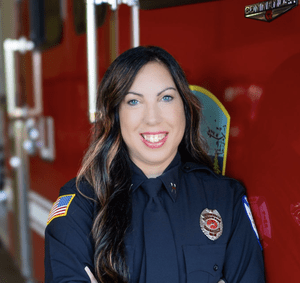 Jen ElleraasAssistant Chief, Garrison Fire and Rescue
Jen Elleraas began her fire service career in 2019. Rising quickly from firefighter to Training Captain and now Assistant Chief, she is also a certified EMT. Recognized as the 2024 MSFCA Officer of the Year, Jen is known for strong leadership, dedication to training, and commitment to operational excellence. She helped organize the Region 5 Women’s Expo and is now organizing the statewide Women Explore Fire Day in Minnesota on May 2, 2026.
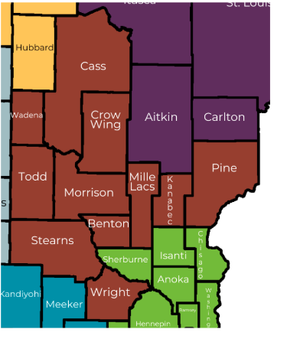 Marion LarsonCentral MN EMS Region Coordinator
Marion Larson has served as an EMS Coordinator for 13 years, dedicated to enhancing emergency services across 11 counties through collaboration with pre-hospital and public safety departments. In this role, she supports vital training initiatives, fosters cross-disciplinary communication, and provides crucial assistance to the Critical Incident Stress Management Team. With 25 years of experience as an EMT and prior service as a Police Reserve Officer, Marion brings a comprehensive understanding of integrated emergency response.
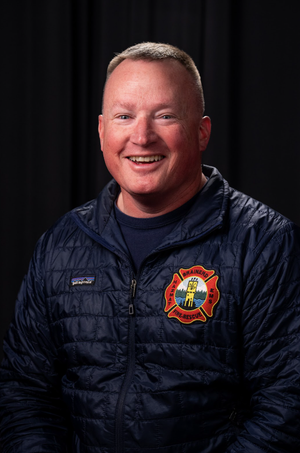 Tim HolmesFire Chief, Brainerd Fire Department
Tim Holmes has over 30 years of experience in public safety, serving in both police and fire roles. He has spent the past 10 years as Fire Chief of the Brainerd Fire Department and is actively involved in several organizations, including the Minnesota State Fire Chiefs Association (MSFCA) and the Minnesota All-Hazard Incident Management Team.
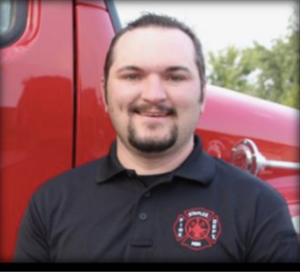 Cole YungbauerFire Chief, Staples Fire Department
Cole Yungbauer began his Fire Service career over 10 years ago, as a volunteer with the Staples Fire Department. Cole quickly rose through the ranks, being chosen as the Chief in 2020. Cole has participated in numerous high-profile incidents, throughout his time working in Public Safety. Cole currently works full time for the State of Minnesota. Prior to working in the Fire Service, Cole spent over 11 years in Law Enforcement, and is also a veteran of the Minnesota Army National Guard.
 Amy PiekarskiResource Development Administrator, Sourcewell
Amy Piekarski is a Resource Development Administrator at Sourcewell. She has a background in government relations, including new program development, partnerships, and operations. Currently, Amy’s focus is on partnering with public safety, including law enforcement, fire departments, first response teams, and municipal and tribal ambulance services in central Minnesota. She works closely with these groups to understand their equipment and training needs. She also facilitates Networks for Law Enforcement, Dispatchers, School Resource Officers (SROs), and Emergency Managers to invest in relationships and provide just-in-time technical assistance.
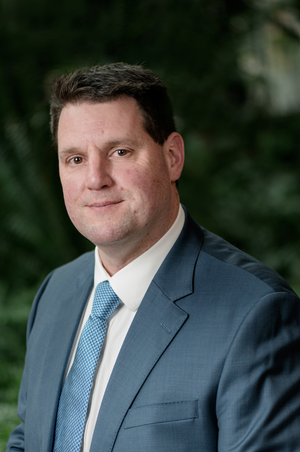 James SmallRural EMS Outreach Program Manager, University of Wisconsin, Wisconsin Office of Rural Health
James Small is a nationally recognized public safety leader with over 30 years of experience across law enforcement, EMS, and fire services. He has led transformational initiatives in workforce diversity, organizational development, and rural EMS reliability, earning multiple innovation awards. A published author and educator, James also holds key state appointments influencing policy and public health systems. His leadership blends data, humanity, and strategic vision.
 Abena Bonso-BruceCOO, The National Volunteer Fire Council
Abena oversees internal operations, grants, budgets, and strategic planning. She has a strong background in association management, human resources, federal grants, team management, and the volunteer fire service. She previously worked at the International Association of Fire Chiefs for seven years, served as the executive director of a transportation association, and was the chief people officer for an association management company. Originally from Ghana, Abena holds both a bachelor’s and master’s degree in business administration. She has a profound passion for the fire service and has served as an administrative volunteer with Loudoun County (VA) Fire and Rescue. She is also the chair of the scholarship program for the Ashburn (VA) Volunteer Fire and Rescue Department, where she has volunteered since 2013.
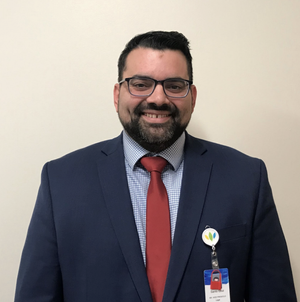 Santo CruzSenior Vice President / Chief Legal Officer, CentraCare
Santo Cruz grew up in rural Stearns County before embarking on his legal career. He currently serves CentraCare as Senior Vice President / Chief Legal Officer. Prior to joining CentraCare, he was a prosecutor for Hennepin County, Assistant Commissioner and General Counsel for the Minnesota Department of Agriculture, Attorney for the Minnesota Department of Commerce, and Deputy Commissioner of the Minnesota Department of Human Services. He earned his bachelor’s and law degrees from the University of St. Thomas, St. Paul. He serves on a number of non-profit and government Boards and Committees. Santo and his family currently reside in rural Minnesota.
 Dr. Alison BrooksResearch Vice President, Smart Cities and Communities – Public Safety, IDC
Ms. Brooks has spent the past 15 years with IDC carving a niche specialization in the role of IT in public safety focusing on digital evidence management in the cloud, Next-Generation 9-1-1, law enforcement information management and tri-service interoperability. Prior to joining IDC Government Insights, Ms. Brooks worked with the province of Ontario’s Ministry of Government Services, advancing two of the government’s I&IT initiatives. Previous to that, while consulting for Capgemini, she collaborated with a major bank on the design of a customer-focused information technology strategy, including a CRM implementation and has had experience implementing ERP for a leading, global biotechnology company.
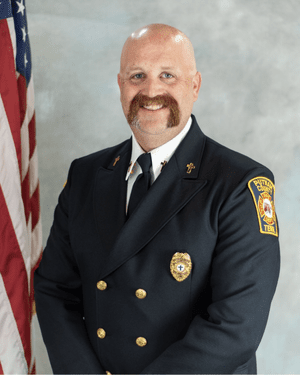 Derrick Edwards, Ph.D.Associate Professor of Psychology, Tennessee Tech University
Dr. Edwards is a Tennessee LPC-MHSP. He received his Master’s degree in 2011 and his Doctoral degree in 2016. Derrick’s research focus surrounds the psychological impacts of being an emergency responder. He currently serves as an Associate Professor of Psychology at Tennessee Tech University where he operates the “TTU Responder Health Lab”. Derrick joined the fire service in 2004 and is a licensed Advanced Emergency Medical Technician.
 Ash HansonCreative Executive Officer, Department of Public Transformation
Ash Hanson (she/her) has over 20 years of experience working with rural communities to activate stories, connect neighbors, and exercise collective imagination. She is the Founder and Creative Executive Officer (CEO) of Department of Public Transformation, a nonprofit working at the intersection of creativity and civic life with rural communities across the country. She is the founder of PlaceBase Productions, a theater company that creates original, site-specific musicals celebrating small-town life and exploring imagined futures. She was named an Obama Foundation and Bush Fellow for her creative civic leadership work with rural communities. She holds an MA in Applied Theatre with a focus on Rural Community Development.
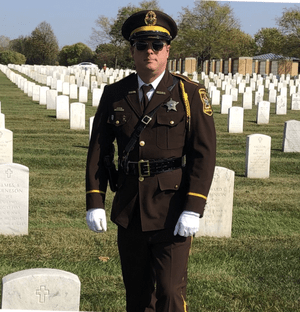 Sean QualySr. Public Safety Solutions, Vertex Unmanned Solutions
Sean Qualy has served as a Law Enforcement Officer since 2000 and is currently a full-time law enforcement supervisor for a metro agency. Since 2019, he has overseen the agency’s UAS (Unmanned Aircraft System) program. In addition, Sean works with a local UAS retail provider, assisting public safety agencies in launching their programs by providing equipment, resources, and training. He has been flying UAS both personally and professionally since 2016.
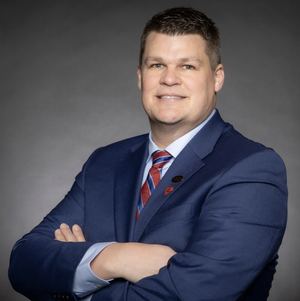 Kolby KolbetChief Innovation Officer, Life Link III
Kolby Kolbet, MS, RN, CMTE, FACHE is Chief Innovation Officer at Life Link III, one of the nation’s leading air medical transport programs. Kolby blends his frontline nursing and EMS experience with strategic leadership to drive healthcare innovation, rural health access, and AI integration. A nationally recognized speaker and advocate for critical care and rural emergency services, he has championed initiatives improving patient outcomes, clinician well-being, and system-wide efficiency across healthcare and EMS.
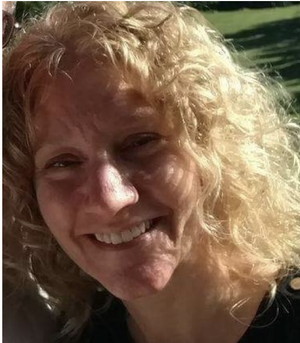 Kristen HerreidLicensed Clinical Social Worker and Mental Wellness Coordinator, Kenosha Police Department and Kenosha Fire Department
Kristen Herreid is a Licensed Clinical Social Worker and the Mental Wellness Coordinator with the Kenosha Police Department and Kenosha Fire Department. She previously served with the Twin Lakes Volunteer Fire Department as an Advanced EMT. Kristen is the owner of Savers’ Hope, First Responder Mental Health. She is also the Clinical Director of Traumatic Incident Resource, Inc, a non-profit organization that provides crisis intervention support to first responding agencies in Southeastern Wisconsin. She has provided mental health support and crisis intervention to first responders for over 20 years. Kristen is an approved instructor with the International Critical Incident Stress Foundation, and was awarded First Responder of the Year in 2021.
 Shawn StokesStrategic Development Manager, Cooperative Services, LLC; Fire Chief, Dunn Loring Volunteer Fire and Rescue Department
Shawn is a Strategic Development Manager for Cooperative Services, LLC with more than 25 years’ experience in the fire service and association management. He is currently Fire Chief of the Dunn Loring Volunteer Fire and Rescue Department, Chairman of the Fairfax County Volunteer Fire Commission in Virginia, and At-Large Board Member of the Volunteer and Combination Officers Section of the International Association of Fire Chiefs.
 Jay BockhausManaging Partner, CORI Innovation Fund
Jay began his career advising on mergers and acquisitions at Gleacher & Co. and Allen & Company. Subsequently, Jay spent a decade at NBCUniversal, which culminated in his running strategy and development for the Entertainment and Digital Networks division. After NBCU, Jay joined Emigrant Bank as Executive Advisor to the Chairman and led investments in several small growth businesses. Jay has a BA from Princeton’s School of Public Policy and International Affairs as well as certificate degrees in East Asian Studies and Japanese Language.
04PrepareBuild rural readiness.
Five technology companies moved into a four-week Rural-Readiness Accelerator led by AscendRural. The accelerator was designed to deepen their understanding of rural communities and markets, connect them with relevant rural and public safety expertise, and help them refine their strategies, value propositions and pitches for rural contexts.
- 5
- technology companies
- 4
- weeks
The technology cohort
Five solutions moved forward.
Selected through the challenge, five companies participated in AscendRural’s Rural-Readiness Accelerator.
 Echo Data Analytics
 is building a data platform for Fire and EMS agencies, especially rural and volunteer-driven ones, by unifying incident, staffing, training, and quality data into one system. Designed by first responders, it delivers real-time insights to improve efficiency, reduce burnout, support recruitment and retention, and simplify reporting without requiring new hardware or complex training.
echodataanalytics.com ↗ Paralign Health
 helps rural EMS agencies and fire departments launch and sustain community paramedicine programs that deliver in-home preventive care. They contract with health plans to fund these services, creating a new revenue stream for EMS agencies and enabling them to pay and retain responders.
paralign.health ↗ PulsePoint
 is a nonprofit mobile app that connects to 911 to alert nearby users when CPR or AED use is needed. The platform engages different responder types (public, registered, professional, and AED owners), improves first responder safety and awareness, and ensures AEDs are more widely used while also supporting responder well-being.
pulsepoint.org ↗ Red Line Safety
 is developing advanced wearable technology that protects firefighters and first responders by providing real-time health, location, and environmental data, especially in areas without cellular coverage. Their rugged system integrates biometric monitoring, location tracking, and toxic gas detection into one platform, giving commanders real-time visibility to improve safety, speed rescues, and support long-term health tracking.
redlinesafety.com ↗ mResilience by TIAG
mRes is a resilience app that combines evidence-based tools like breathing regulation, mindfulness, and guided meditation with secure peer support to help users reduce stress and build personal resilience. Organizations can customize and update the content in real time, ensuring it stays relevant and impactful for their users.
tiag.net/innovations/mresilience ↗
The outcomes
Technology companies left more rural-ready.
The core outcome of this initiative was not a completed pilot. It was increased rural readiness among the selected technology companies: a stronger understanding of rural communities and markets, clearer rural strategies and value propositions, and greater preparation to engage rural organizations.
- 100%of participating companies reported that the accelerator improved their understanding of rural communities and markets.
- 9.2 / 10average rural-readiness score following the accelerator.
- 80%of participants reported significant or extreme improvement in rural strategy, value proposition and pitch.
- 100%of mentors rated their mentee companies as more rural-ready following the accelerator.
Rural context changed how innovators approached the market.
Mentorship and direct feedback helped participating companies connect their technologies more clearly to the workforce and operational realities facing rural public safety organizations, while refining how they positioned their solutions for rural communities.
What the work reinforced
What this work reinforced.
Start with a problem specific enough to act on.
Clear problem definition helped innovators understand what rural communities needed and gave evaluators a stronger foundation for assessing fit. The challenge centered recruitment and retention while leaving room for technologies addressing connected barriers such as training, burnout, health and dispatch.
Rural expertise strengthens technology selection.
Bringing local and national public safety perspectives into evaluation helped assess solutions through the realities of rural implementation, not innovation potential alone.
Direct connection accelerates rural readiness.
Mentorship and interaction with people who understood rural communities and public safety gave technology companies context they could act on as they refined their strategies, value propositions and pitches.
Showing up in person accelerates rural learning.
Time together in person helped technology companies learn faster about rural communities and build relationships with the people and organizations they hope to serve.
Rural innovation benefits from collaboration.
The accelerator created opportunities for technology companies to learn from one another and explore complementary approaches, adding value beyond a traditional winner-takes-all competition.
National reach can start with a local problem.
A challenge grounded in Central Minnesota attracted 50 applications from 21 U.S. states and three other countries, showing how a clearly framed rural need can resonate far beyond one region.
Research & resources
Go deeper into the work.
Featured case study
Volunteer First Responder Innovation Challenge: 2025 Case Study
Go behind the program to see how AscendRural and CORI translated a community-defined problem into a national technology search and Rural-Readiness Accelerator, including program design, evaluation, outcomes and lessons learned.
Read the full case study (PDF) →-
Program story
Five finalists selected for the Volunteer First Responder Innovation Challenge
Meet the five technology companies selected to continue into AscendRural’s Rural-Readiness Accelerator.
Read the story → -
Challenge
Volunteer First Responder Innovation Challenge
Explore the original challenge and the rural recruitment and retention needs that shaped the technology search.
Explore the challenge →
Have a rural challenge worth solving?
AscendRural brings rural organizations, innovators and partners together to define important problems, find promising solutions and build the readiness needed to put innovation to work in rural communities.